
The New Mexico Warrant System
No single public New Mexico database holds every active warrant. Arrest, bench, traffic, probation, municipal, juvenile, and family-related orders live in separate records systems, each with its own role. The issuing court creates the judicial order and tracks the case status. Odyssey handles court case work and includes a defined failure-to-appear process. Some court locations forward eligible warrant and status messages to DPS. Authorized law-enforcement staff then act on wanted-person records through restricted systems.
None of these layers replaces the others. A public Case Lookup result can identify the case and court, but it is not an all-warrant query. The county sheriff or city police may hold service details. The issuing clerk can confirm the court's current order. A local warrant check starts from the case number and routes to the right county and court through the New Mexico county directory.
New Mexico Case Lookup Is Not a Warrant Registry
New Mexico Case Lookup is the Judiciary's public search. It gives a free case index for supported courts and helps people find docket details. What it does not give is a complete active-warrant file, court documents, or any query of restricted law-enforcement data. The service's own disclaimer notes that internet information is not the official Judiciary record. And a no-result cannot prove that no warrant exists.
Coverage has boundaries. Juvenile criminal matters are excluded. Municipal content is limited to certain historical conviction information rather than a full city case docket. Sealed records, protected details, some older paper-era cases, and documents can all be absent. Registered re:SearchNM tiers may offer fuller Odyssey case information, but they are not a public statewide warrant roster either. The official Case Lookup and the Judiciary's public access information lay out the public route and its limits.
Statewide Warrant Databases
New Mexico runs several warrant systems for several audiences. Public Case Lookup is the visible case index. Odyssey is an internal Judiciary case-management tool. Court-to-DPS transmission moves some eligible court messages to law enforcement. It is not open to public name searches. NCIC and related state interfaces stay restricted to authorized criminal-justice users. NMCD and USMS publish curated public programs, not complete warrant sets.
| System or Record | What It Holds | Public Boundary |
|---|---|---|
| New Mexico Case Lookup | Selected court case summaries and docket events | Not warrant-only; limited cases, no documents |
| Odyssey workflow | Court case and defined FTA warrant activity | Internal Judiciary use |
| Court-to-DPS exchange | Qualifying warrant and status messages from participating locations | Law-enforcement workflow, no public search |
| NCIC and state interfaces | Authorized wanted-person and justice information | Restricted to authorized users |
| NMCD and USMS public programs | Selected supervision or federal fugitive information | Curated subsets, not a court index |
New Mexico Odyssey-to-DPS Warrant Path
The Judiciary's FTA procedure describes an Odyssey workflow used in District, Magistrate, and Bernalillo County Metropolitan Court cases. A judge orders the appropriate Failure to Appear in Court (FTA) Warrant in an existing case. Staff create the instrument, confirm the message, and record the result. At participating locations, an electronic route labeled for NMSP sends a qualifying warrant to DPS. The same path can carry later cancellation or disposition updates. Other offices follow manual steps.
That written procedure covers one FTA category. It does not mean every arrest warrant, municipal order, juvenile matter, probation process, child-support order, or warrant from a nonparticipating office travels this electronic route. A successful send to DPS also gives the public no way to query the law-enforcement system. The Judiciary's FTA warrant SOP describes staff work in New Mexico courts, not a public lookup page.
How a County Warrant Enters the Statewide System
The path starts with the court case, not a state database search. The judge signs the warrant. Court staff enter it in the case system. Eligible FTA messages may move to DPS at participating sites. Authorized officers receive operational data. The officer reports service or return, and the issuing court updates its record. A county or city agency may also keep its own service file.
Case event, warrant order, law-enforcement entry, and return are connected records, yet each can sit with a different New Mexico office. If an order is served, canceled, or surrendered, ask the clerk whether the docket shows the change and whether any agency was notified. The public usually identifies the case first, then requests status from the clerk. No restricted-system query comes through an ordinary public records request.
In short: Court case and signed order → Judiciary case record → limited court-to-DPS message when enabled → authorized officer service → officer return and court status update. A public case search is an aid to finding the right record, not the final status layer.
New Mexico's 26-County Warrant Launch Figure
The Judiciary announced its first phase of electronic warrant transmission on January 29, 2024. The release described court locations in 26 of New Mexico's 33 counties and nearly three-quarters of Magistrate Courts. Before the rollout, court-to-law-enforcement delivery could mean paper mail, file sharing, or paper passed through prosecutors. The stated goal was faster officer access to signed warrants and quicker transmission of changes.
That 26-county figure describes the launch phase only. The Judiciary publishes no current directory of participating courts and no complete coverage map, so treat the number as rollout history rather than present-day statewide coverage. The 2024 Judiciary announcement tells that story. Current status still comes from the issuing court.
US Marshals and Fugitive Warrants
Federal warrants in New Mexico run through the U.S. Marshals Service District of New Mexico. The Marshals enforce federal judicial warrants, chase fugitives, and run joint operations. Their Albuquerque and Las Cruces Southwest Investigative Fugitive Teams partner with state, local, tribal, and federal agencies. One tool they use is WIN, the Warrant Information System. That system is restricted. Publicly profiled fugitives are a selected federal program, not a full warrant list, and they leave out state and county court orders too.
Federal cases themselves belong to the U.S. District Court for the District of New Mexico. PACER can show public docket activity there. But PACER is not a warrant registry, and sealed matters may not appear. A state Case Lookup result cannot confirm federal status either. If a family member has a federal case, start with the court clerk or counsel rather than treating a public profile as a status check. One warning from the District of New Mexico is worth remembering: it will not demand payment by phone or email before an appearance.
New Mexico Warrant Service and State Police
The Department of Public Safety houses New Mexico State Police and the Law Enforcement Records Bureau. Both take part in law-enforcement information exchange, court-to-DPS processing, and fugitive work. Neither one issues a court warrant. Neither decides whether a judge should withdraw one. A public records request to DPS cannot force an NCIC search or produce a current statewide warrant list. The issuing court alone controls an order's status. DPS's public information page shows how an existing records request reaches the agency; the official DPS public information section covers agency records, not real-time warrant confirmation.
A public-record request is the slow route to an existing document, not the way to learn a warrant's status today. New Mexico DPS answers record requests; for a signed order, ask the issuing court directly.
Law Enforcement Records Bureau
State criminal-history and law-enforcement records functions; no public active-warrant counter.
Statewide System vs County Warrant List
A statewide index and a county warrant list answer two different questions. New Mexico Case Lookup can point you to a public case summary. A sheriff's portal, in turn, may publish one agency's warrants. Neither source carries the complete official record for every court and city. The judge's order and its current status stay with the issuing court, which may not be the same office that serves the warrant.
| Question | Statewide Case Index | County or Court Record |
|---|---|---|
| Find a supported case | Case Lookup can help | Clerk can identify its docket |
| Confirm current warrant status | Not a complete status source | Ask the issuing court |
| See service activity | May show limited docket events | Serving sheriff or police may hold service record |
| Check a city matter | Municipal coverage is limited | Contact the Municipal Court Clerk |
A blank screen online tells you little in New Mexico. Coverage gaps, sealed files, slow data entry, and lagging updates all hide active warrant records from view. Find the record holder with your case or citation number, then confirm warrant status with that office directly.
When New Mexico Warrants Are Missing Online
Start by making sure you searched the right court tier. A Municipal Court citation often stays out of the limited municipal slice that Case Lookup shows the public in New Mexico. Juvenile matters, sealed cases, older paper files, and restricted warrant documents can all be invisible too. A sheriff portal may track one agency only. None of that means an active warrant is absent.
Confirm with the record holder. Use the citation or case number to reach the issuing District, Magistrate, Metropolitan, or Municipal Court Clerk. Ask for the current order, whether it remains active, and the next court step. Then contact the relevant county or city law-enforcement office about its service record if needed.
The county directory points you to local court and sheriff pages in New Mexico. The Judiciary's court Master List lists court locations and contacts. A records request works for an existing public document, but it is no substitute for an urgent warrant status check, and it will not reach restricted data.
Warrant-System History and Technology
New Mexico built its public case search and its law-enforcement warrant exchange along two separate tracks. The Judiciary's automation office grew through the 1990s, and older Case Lookup guidance still warns that pre-1997 records may vary because local systems were converted at different times. The public index became easier to use over the years. Even so, it has never offered a complete list of outstanding warrants anywhere in New Mexico. The first electronic court-to-DPS warrant exchange phase was announced in 2024. Internally, the Judiciary keeps documenting warrant creation and disposition in Odyssey, while the public side remains a case-summary service with firm limits. Other changes touch what a warrant means for daily life. Senate Bill 47 ended license suspension based solely on failure to appear or nonpayment, and revised ability-to-pay rules took effect October 9, 2025. Those shifts change license policy and payment-default procedure, not a court's power to issue or recall a warrant. Put together, the story is gradual digitization, a wider case lookup, a first-phase electronic exchange, and local court confirmation still doing the final work. The published reports offer workload and rollout figures, not a verified statewide count of New Mexico outstanding warrants.
New Mexico Federal Warrant Dockets
The federal District of New Mexico and the state Judiciary run separate case systems. PACER can pull public filings from the federal court, but it cannot query the state court database or NCIC. Sealed documents stay restricted there, and the court's own public terminals serve a purpose far from law-enforcement systems. The PACER sign-in and search service lays out its account-based route into the federal docket.
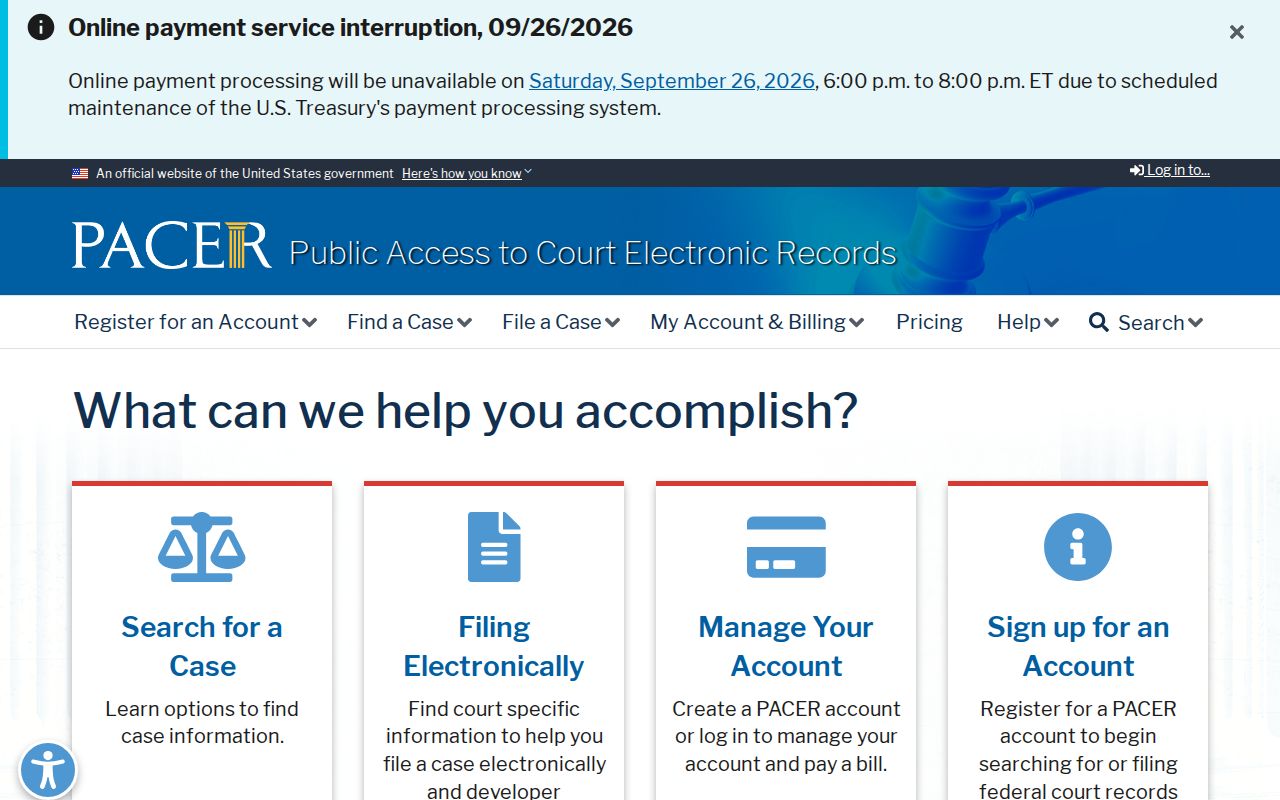
A PACER docket shows public case events in New Mexico federal matters. No result there does not rule out a sealed filing or an active law-enforcement record. For direct help, the U.S. District Court for the District of New Mexico posts its numbers on its official court contact page.
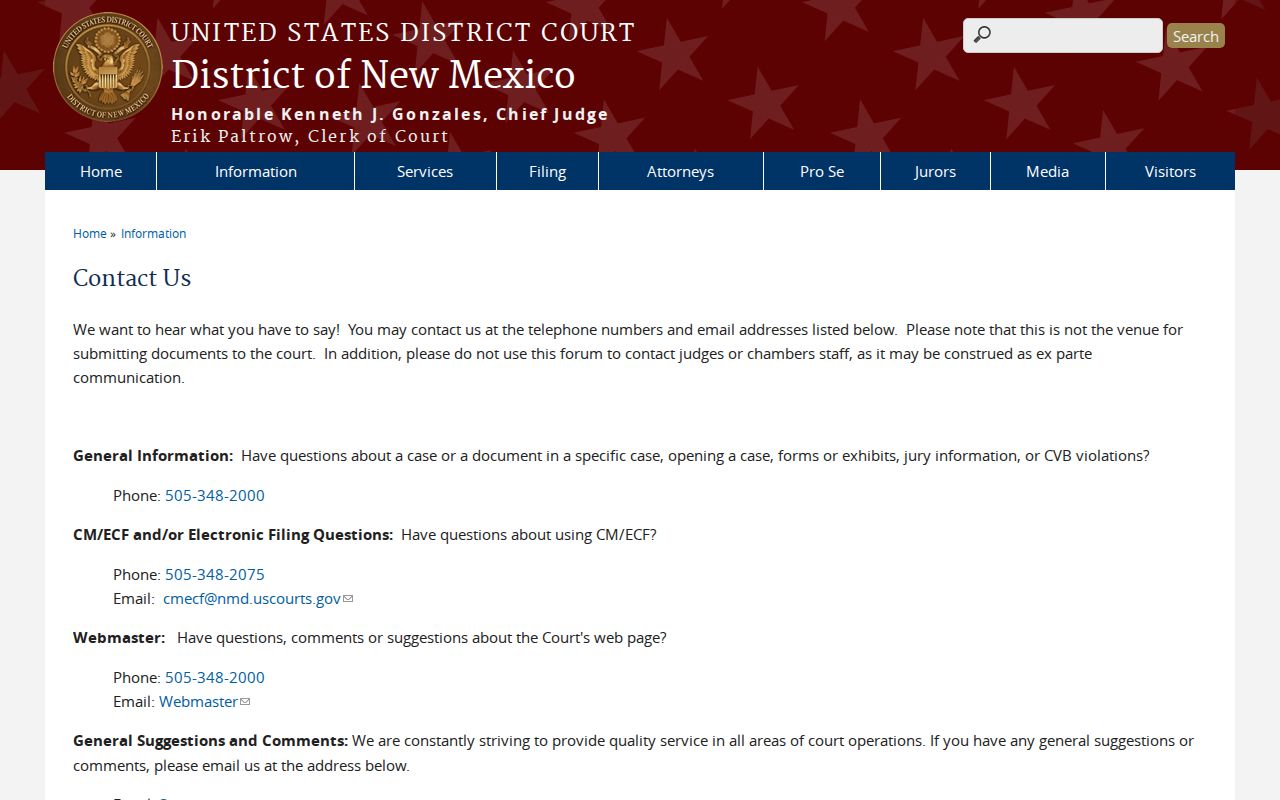
The clerk's contact page handles docket questions for New Mexico federal cases. It offers no NCIC search and no statewide warrant lookup.
New Mexico Warrant Court Tiers
New Mexico sorts its criminal courts into a few clear tiers. District Courts carry the felony cases. Magistrate Courts take misdemeanors, DWI, traffic, and preliminary felony work. Bernalillo County Metropolitan Court covers countywide misdemeanor, traffic, domestic-violence, and felony first-appearance matters. Municipal Courts handle city ordinance issues. Probate Courts deal with estates, not ordinary criminal warrants. New Mexico has no separate general criminal "county court" tier. The Judiciary profile counts 34 District Courts across 13 districts, 46 Magistrate Courts, one Metro Court, and 81 Municipal Courts, though some page footers still show older totals of 43 Magistrate and 78 Municipal Courts. The county seat does not always mark the court location. Albuquerque criminal records route to Metro rather than an assumed city court, so use the Judiciary county court finder and county directory to identify the clerk on the actual case.