
Municipal Court Warrants in New Mexico
In New Mexico, a municipal court warrant is a judge's order in a case a city court holds. The city keeps the file. These dockets cover city-ordinance violations, traffic offenses, and petty misdemeanors. They sit as one tier among several. Magistrate Courts, the Bernalillo County Metropolitan Court, and District Courts run alongside them. Each tier keeps its own cases. So a city-court warrant is not automatically a sheriff's warrant, and your county does not reveal which court holds the case. Ask the city court clerk. The clerk confirms whether a warrant was issued, served, canceled, or otherwise handled. Officers may execute a warrant under the governing rule and its scope. Service does not move the file. New Mexico uses bench warrant and Failure to Appear in Court Warrant labels. A capias or capias pro fine, terms used elsewhere, is not a New Mexico municipal label.
New Mexico Municipal Warrant Portal Limits
Santa Fe provides a useful example of what a municipal public portal can and cannot do. The city's Municipal Court page links to its FullCourt public portal and tells users to read the disclaimer before proceeding. That is a city case and calendar service, not a public roster of every municipal warrant in New Mexico. The city's notice warns that recent entries may not appear right away and disclaims completeness and accuracy. A visible case result is a lead for follow-up, not a current warrant certification.
The New Mexico Municipal Court page for the city explains how to reach its portal and read the disclaimer. Its public-access instructions do not show a person's case or warrant record.
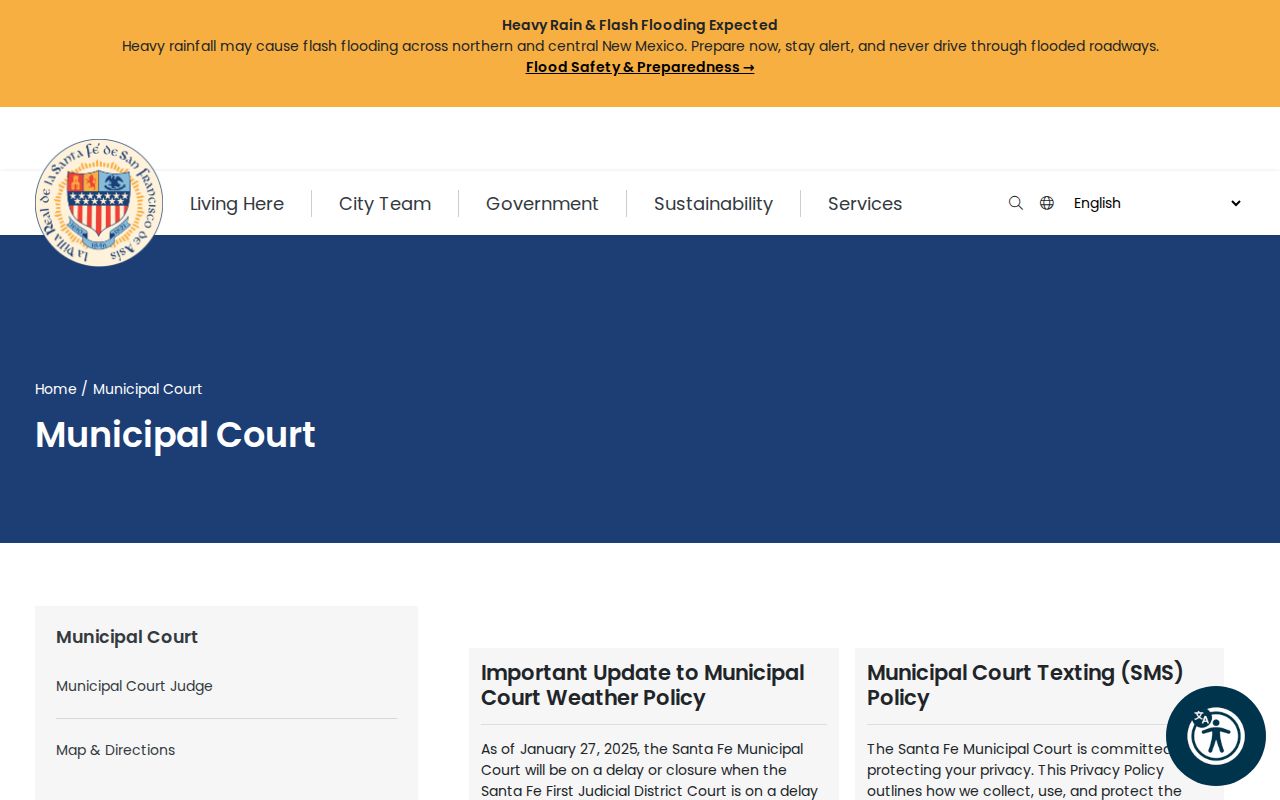
For your own case, call the city court clerk. The clerk checks the docket and any active order. Note: Santa Fe's FullCourt service is a city case portal, not a New Mexico statewide warrant search.
How Municipal Warrants Differ From County Warrants
New Mexico has no county-court tier for criminal warrants. The label can mislead. A warrant described as a county matter may sit in District Court, Magistrate Court, or Bernalillo County Metropolitan Court. A Municipal Court order belongs to its city. The sheriff may serve it, but in New Mexico the issuing court stays keeper of the order.
| Feature | Municipal Court Warrant | County-Level Court Warrant |
|---|---|---|
| Issuing court | City Municipal Court for its cases | District, Magistrate, or Metro Court, based on case type and location |
| Typical matter | City ordinance, traffic, DWI, or petty-misdemeanor case within local authority | Felony, state misdemeanor, DWI, traffic, or other case within that court's jurisdiction |
| Case record | Municipal Court clerk maintains the city case and order | The clerk of the issuing state court maintains the case and order |
| Service | Authorized law-enforcement officer under applicable rule and order | Sheriff, State Police, municipal police, or another authorized officer as allowed |
| Public search | Local portal varies; New Mexico Case Lookup has limited municipal coverage | Case Lookup and sheriff tools each have separate scope and limits |
A municipal order will not always appear in a county sheriff search or travel through every statewide law-enforcement route. Confirm with the New Mexico court that issued it.
New Mexico Municipal Warrant Searches Have Limits
Santa Fe's FullCourt portal shows two top-level menus. Under Searches, you can query by Attorney, Officer, Party, Police Reference Number, or Vehicle Plate. Under Cases, you enter a known docket number. The live site passes through a login gateway first. Required entries, account needs, result columns, sorting, and export options all sit behind that step. The city describes no warrant-only filter. Nor does it publish a complete warrant list. The FullCourt portal gateway is a city-specific case service in New Mexico with a login step, and it does not show a warrant result or a named person.
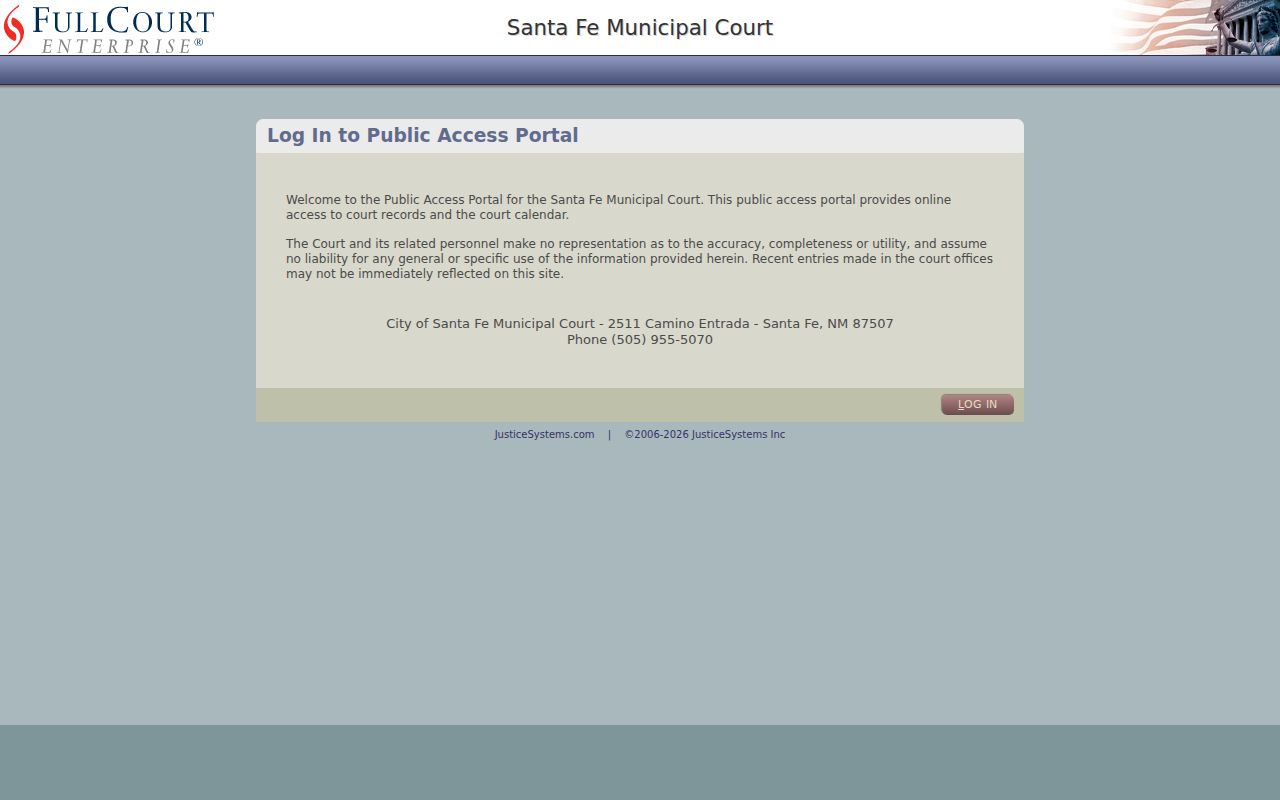
The menu labels describe case searches only. New Mexico Case Lookup spans several court tiers. Its municipal slice is narrow. It holds only historical criminal domestic-violence and DWI conviction information, not the full city docket. A blank result there cannot rule out a municipal traffic or ordinance warrant, and a hit is not proof of current warrant status. Once you know the city, the official Municipal Courts directory helps you find the right local clerk.
How to Check a Municipal Court Warrant
Start with the ticket, summons, notice, or case number. It names the city and the court. If the record names a Municipal Court, the city clerk is your primary contact for the case. A sheriff's office that served or listed an order can describe its own service record. The court still confirms the judicial status. New Mexico's Judiciary Master List and the county directory help route a question when the exact court is unclear.
- Read the citation or notice for the city, court, case number, and appearance date.
- Check the city's official case portal if it offers one, while noting its coverage and update limits.
- Call the Municipal Court clerk and ask whether a warrant is active, served, canceled, or otherwise resolved.
- Ask what appearance, filing, payment, or release step the court requires, and request written confirmation after action.
The New Mexico county directory opens the way. Use it to reach local court information, then select the right Municipal Court through the state's court directory. A county is a route, not a substitute. Note: the county directory helps locate municipal contacts, but the city's court holds its case and warrant.
New Mexico Municipal Warrants Need Court Routing
Albuquerque breaks the usual pattern. The City Clerk's published records guidance routes criminal and warrant questions to Bernalillo County Metropolitan Court, not to the Albuquerque Municipal Court. Trust the court named on the citation. The City's own referral treats Metro as the contact for that category of case. Outside the metro area, city ordinance violations and local traffic matters often stay with the municipality's own court. A state traffic ticket can land in Magistrate Court or Metro Court instead. The tier plus the case number tell a requester where the file lives. For anything ticket-driven, a New Mexico traffic warrant stays a court-record question, while MVD keeps only driving-privilege records and states plainly that it cannot issue or confirm warrants. Court counts vary by source, too. New Mexico Judiciary profiles list 81 Municipal Courts, even though some site footers still carry older totals. For an official contact, use the current Municipal Courts directory or the Judiciary Master List. A statewide page or a county sheriff tool will never show the full docket of a city court.
What a Municipal Warrant Shows
New Mexico posts no single public display of municipal warrants, and there is no universal city warrant-number format. Form 9-212C, used for Magistrate and Municipal bench warrants, shows the fields court staff work with when it is blank. Filled copies contain restricted data. That material does not belong in a public lookup. Read any record next to the case docket. The issuing clerk confirms what it means.
| Case and court | City or court caption and the court case number, which identifies the record to the clerk. |
|---|---|
| Basis | The stated reason, such as failure to appear, contempt, fine or costs, probation, or another court order. |
| Charge | The listed offense or city matter connected to the case; check the ticket or complaint for context. |
| Release terms | Any bond or court-approved payment or release direction entered for that warrant. |
| Issue and return | Issuance date, judicial approval, officer return, and status updates recorded by the court. |
| Identifiers | Blank forms include sensitive personal fields. Do not copy or publish private identifiers from a completed warrant. |
A public portal may list a docket event yet leave out the warrant instrument and its service status. Ask the New Mexico clerk to explain the current order and any separate court date.
New Mexico Warrant Fee Text Is Stale
Some municipal-court pages still quote a USD 100 warrant fee. Treat that number with caution. The current 2025 Form 9-212C states that Municipal Courts are not authorized to assess the former USD 100 fee. Rules and forms changed after the older fee language circulated, and the form itself places that historical text in brackets or deletion. An outdated local page does not override current court authority. The current New Mexico bench warrant form settles the question. Other fines or costs in a case may still be due, and the court can quote the current balance along with accepted payment methods. There is no single statewide clearance price for a municipal warrant. Before paying anything, confirm the amount and whether payment alone resolves the warrant, an appearance, or another court condition. A portal receipt is not the same as an order being satisfied. If a city portal or a caller cites a figure that conflicts with a current rule or form, dial an official court number. Ask the clerk to explain the charge in the case record. Note: current forms and clerk confirmation beat an older webpage still quoting a former fee.
Resolving a Municipal Court Warrant
Each city court controls its own warrant. It alone decides what satisfies the order. To recall a warrant is to ask the judge to withdraw it; to quash one is to ask the judge to set it aside. Depending on the basis, the next step in a New Mexico municipal case may be an appearance, a request for a new date, a filed motion, a court-confirmed payment, or an ability-to-pay hearing. Paying online does not automatically satisfy an appearance requirement or other condition. Call before going to court or a place of custody. Follow the clerk's current instructions.
- Confirm the case number, issuing city court, warrant type, and current status.
- Ask whether the judge requires an in-person appearance or allows a written request for a new date or warrant recall.
- If the issue is nonpayment, ask about the court's ability-to-pay process, installment terms, community service, or other relief.
- After the court acts, request confirmation that the warrant was canceled and ask whether any case obligation remains.
Caution: A New Mexico municipal warrant remains a court order until the issuing judge changes it; payment or an online docket result alone may not show cancellation.
No statewide form automatically recalls every municipal warrant in New Mexico. The clerk names the procedure for that case, and a lawyer can advise on legal consequences or custodial risk.
New Mexico Municipal Warrant Payment Rules
Rules effective October 9, 2025 added ability-to-pay safeguards for failure-to-pay cases in Municipal Court, along with Magistrate and Metro Courts. Sentencing includes an ability-to-pay assessment. Full payment not possible? The rule then allows an individualized installment plan, community service, or other appropriate relief. The court can modify an agreement for good cause. A missed payment or service deadline usually brings a summons first. That summons offers a chance to pay, appear, or request a hearing before any first failure-to-pay warrant issues. The Municipal Court provision is Rule 8-206.1, part of the Judiciary's 2025 approved amendments. Its payment-default path differs from an initial Failure to Appear in Court Warrant after a missed hearing. Contact the New Mexico court before assuming nonpayment produced a warrant, and ask what the current order says. A judge decides whether any request changes an order. An online payment by itself never does. These rules also show why a stale fee claim or a generic payment link should not drive a decision in New Mexico. Use the issuing court's case-specific balance and instructions, and keep any new hearing date or filed order.